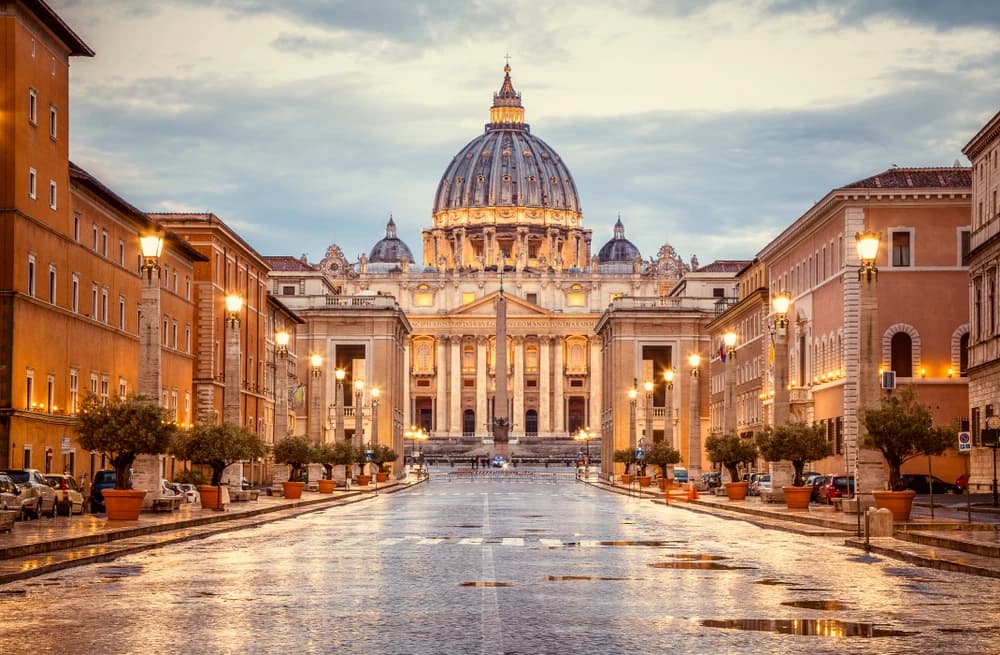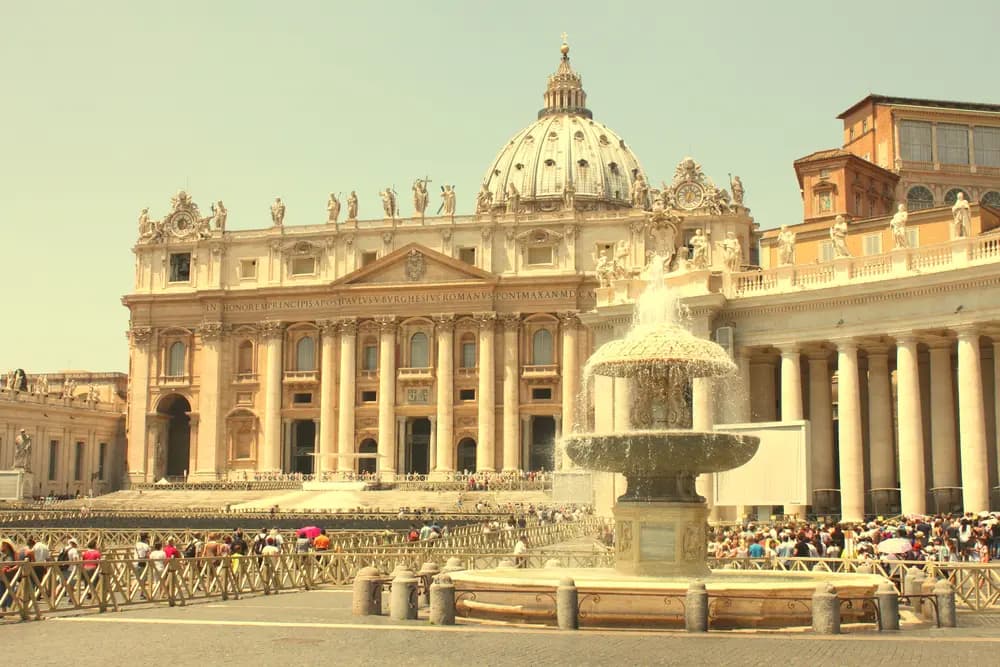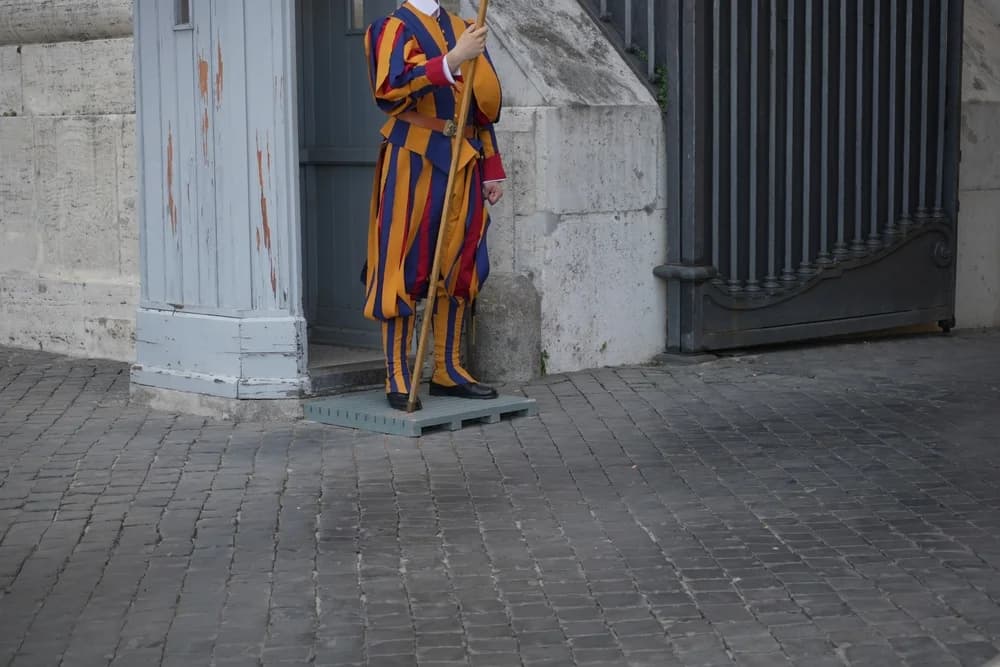
Anyone who has walked past the Arch of the Bells beside St. Peter’s Basilica remembers the moment: two young men in blue, red and yellow stripes, halberd in hand, standing perfectly still while the crowds flow around them. They are not actors dressed up for tourists. They are members of the Pontifical Swiss Guard, the oldest army still in service anywhere in the world and the only military force still protecting a sovereign pontiff. Behind those Renaissance colours lies a story of mercenary loyalty, a bloody last stand and a recruitment process stricter than that of most modern armies. Here is how a handful of Swiss soldiers became the Vatican’s most photographed protectors.
When Was the Swiss Guard Founded and Why?
The official birthday of the Swiss Guard is 22 January 1506, when 150 soldiers from the Swiss cantons, led by Captain Kaspar von Silenen, marched into Rome through the Porta del Popolo and were blessed by Pope Julius II. The choice was anything but sentimental. At the time, Swiss infantrymen were considered the finest mercenaries in Europe, feared for their discipline with the pike and their reputation for never breaking ranks. Italian princes, French kings and Spanish viceroys competed to hire them, and a warrior pope determined to reassert papal power over central Italy wanted the best soldiers money could buy.
Julius II was not only a military strategist but also the most ambitious art patron of his age, and that detail matters to anyone visiting the Vatican today. In the same year the guards arrived, he laid the foundation stone of the new basilica, a project you can still read in every column and chapel on a guided tour of St. Peter’s Basilica. Two years later he summoned Michelangelo to paint the Sistine Chapel ceiling. The Swiss Guard was born in the same creative whirlwind that shaped the Vatican’s greatest masterpieces, which is why their presence feels so perfectly in tune with the setting they defend.
What Happened to the Swiss Guard During the Sack of Rome?
The defining moment in the history of the corps came on 6 May 1527, when the mutinous troops of Emperor Charles V broke through Rome’s walls and began the devastating episode known as the Sack of Rome. As Landsknechts and Spanish soldiers poured towards the Vatican, the Swiss Guard formed a rearguard on the steps of St. Peter’s and around the old Teutonic cemetery, fighting inch by inch to slow the attackers. Of the 189 guards on duty that day, 147 were killed, including their commander Kaspar Röist, who according to tradition was struck down in front of his wife.
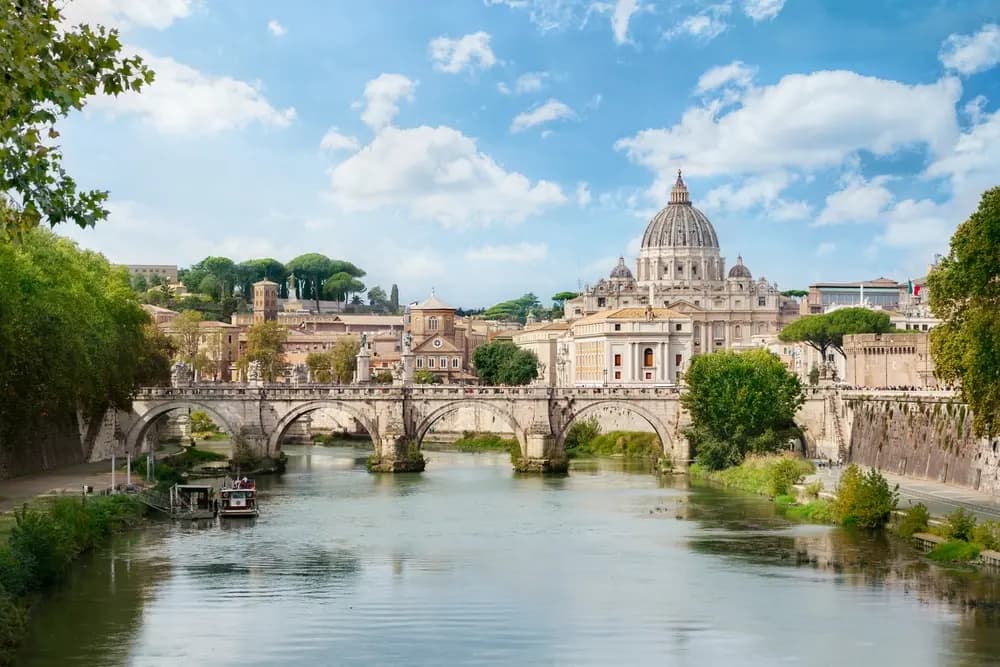
Their sacrifice bought just enough time for Pope Clement VII to escape along the Passetto di Borgo, the raised fortified corridor that still links the Vatican to Castel Sant’Angelo. The 42 survivors escorted him to safety, and the pope endured a months-long siege inside the fortress. That single afternoon turned a band of hired soldiers into a symbol of absolute loyalty, and it explains a tradition that continues today: every new recruit takes his oath on 6 May, the anniversary of the massacre, so that each generation of guards is sworn in under the memory of those who fell defending the pope.
Who Designed the Swiss Guard Uniform?
Ask around in Rome and sooner or later someone will tell you that Michelangelo designed the Swiss Guard uniform. It is one of the Vatican’s most persistent legends, and it is simply not true. The striped outfit worn today, known as the gala uniform, was created in 1914 by Commander Jules Repond, who wanted to replace the rather generic nineteenth-century dress with something more historically faithful. He studied Renaissance sources in depth and settled on wide puffed sleeves, slashed doublets and breeches combining the blue and yellow of Julius II’s Della Rovere family with the red associated with the Medici popes.
Repond’s main inspiration came from the frescoes of Raphael, whose painted soldiers and courtiers fill the papal apartments, so one of the small pleasures of a private tour of the Vatican Museums and Sistine Chapel is recognising those same silhouettes on walls painted four centuries earlier. Every uniform is still tailored by hand inside the Vatican, and each takes dozens of hours to complete. On ceremonial days the look is finished off by a morion helmet topped with an ostrich plume, a white ruff collar and the traditional halberd, while everyday duty calls for a far simpler blue uniform worn with a black beret.
How Do You Become a Pontifical Swiss Guard?
Joining the Pontifical Swiss Guard is far more selective than the postcard image suggests. Candidates must be Swiss citizens and practising Catholics, aged between 19 and 30, at least 174 centimetres tall, unmarried at the time of enlistment, and holders of a professional diploma or secondary school qualification. They must also have completed basic training in the Swiss Armed Forces, which means every recruit arrives already familiar with weapons, discipline and military life. A reference from their parish priest and a spotless personal record complete the application, and the commitment lasts a minimum of two years, often extended by those who stay on.
Behind the Renaissance costume stands a thoroughly modern security force. Guards train in close protection, crowd control and self-defence, and they carry firearms alongside the ceremonial halberd when the situation requires it. The climax of their journey is the swearing-in ceremony held every 6 May in the San Damaso courtyard, where each recruit grips the corps flag with his left hand, raises three fingers of his right hand to symbolise the Trinity and pledges to serve the reigning pope and his legitimate successors, even at the cost of his own life. Few oaths anywhere in the world still carry such weight.
Where Can You See the Swiss Guard in Vatican City?
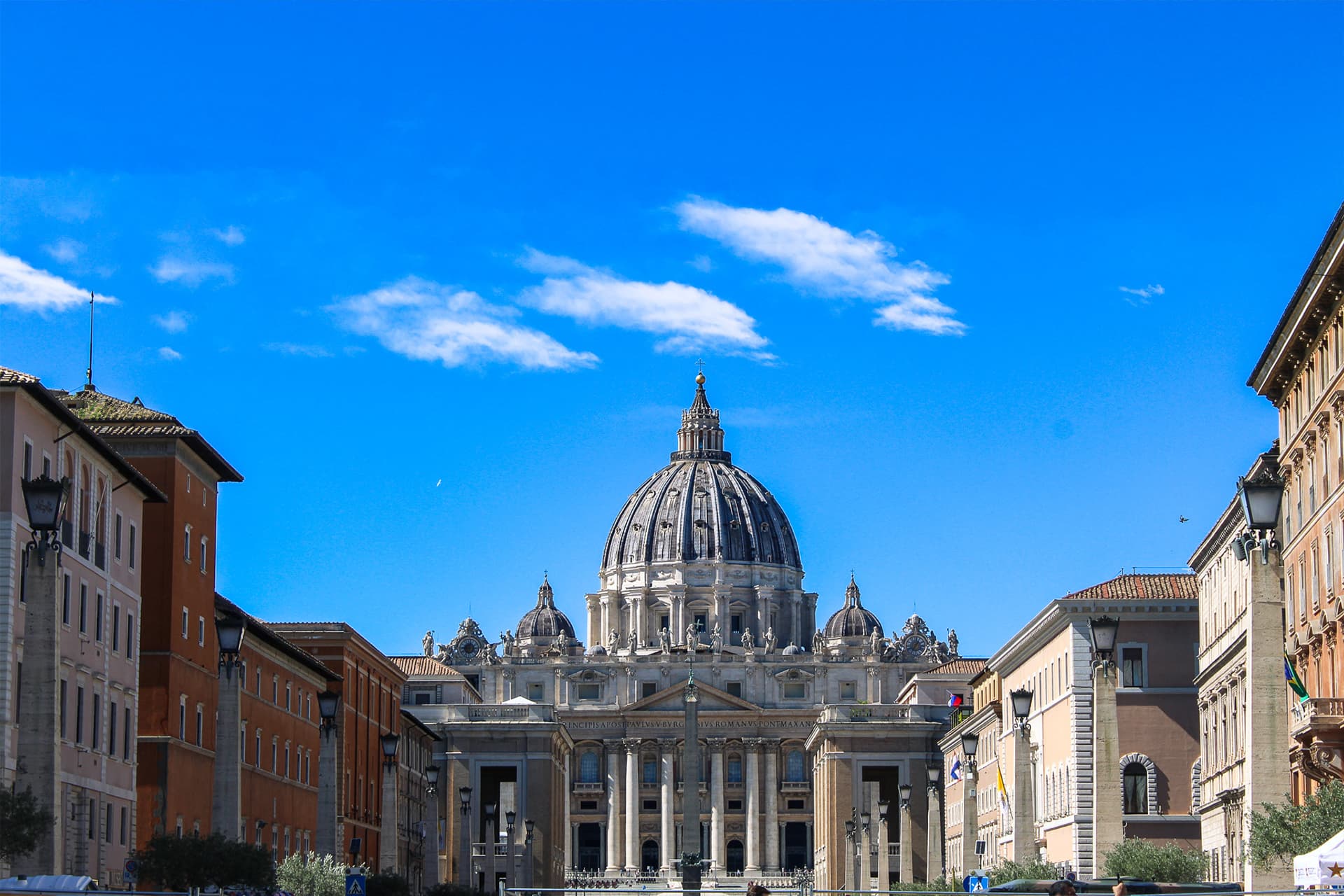
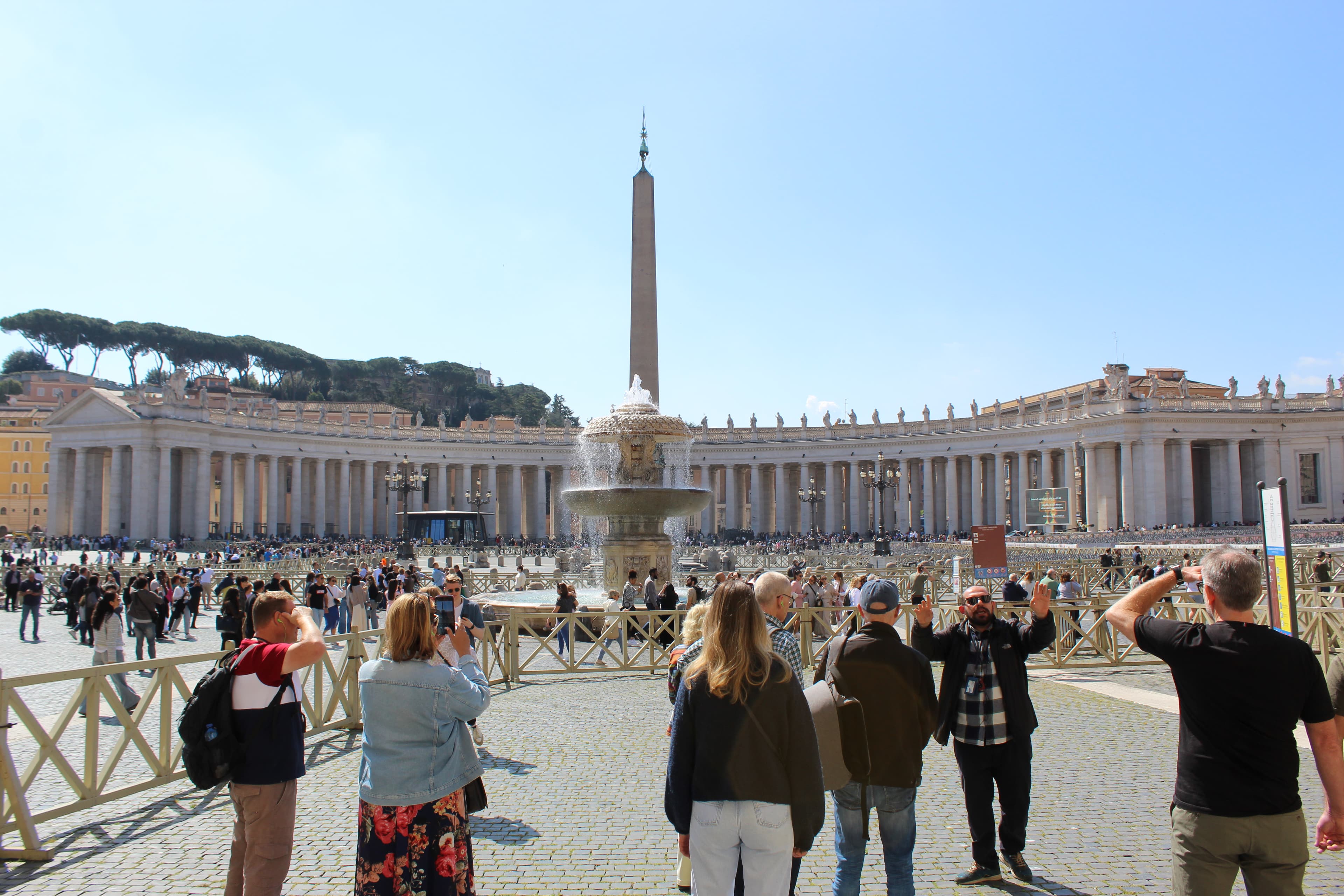
The easiest place to spot the Swiss Guard is the Arch of the Bells, on the left side of the basilica’s facade, where guards in full colours stand at the entrance used by officials heading into Vatican City proper. Other posts include the Bronze Door, at the end of Bernini’s right-hand colonnade, which leads towards the Apostolic Palace, and St. Anne’s Gate, where you will see them checking vehicles and passes. Anyone joining a small group tour of the Vatican Museums, Sistine Chapel and St. Peter’s walks right past these posts, so keep your camera ready as you cross the square.
Inside the basilica, the guards take on a ceremonial role during papal Masses and major liturgies, flanking the altar and the pope’s path in their plumed helmets. For a completely different perspective, climbing the dome of St. Peter’s rewards you with a bird’s-eye view over the gardens, palaces and courtyards of the tiny state these soldiers have guarded for more than five centuries. Remember that photos are welcome but conversation is not: guards on duty are not allowed to chat or pose, so admire them respectfully from a distance and let their stillness speak for itself.
Meet the Swiss Guard on a Private Vatican Tour
From Julius II’s hired pikemen to the highly trained bodyguards of today’s pope, the Swiss Guard tells the whole history of the Vatican through a single uniform: its ambitions, its darkest hours, its artistic genius and its unbroken continuity. Seeing them in person, framed by Bernini’s colonnade and Michelangelo’s dome, turns a quick sightseeing stop into a lesson in five hundred years of European history. The difference lies in knowing what you are looking at, which stories sit behind the stripes and the halberds, and which corners of the Vatican still preserve the traces of the soldiers who have protected it since 1506.
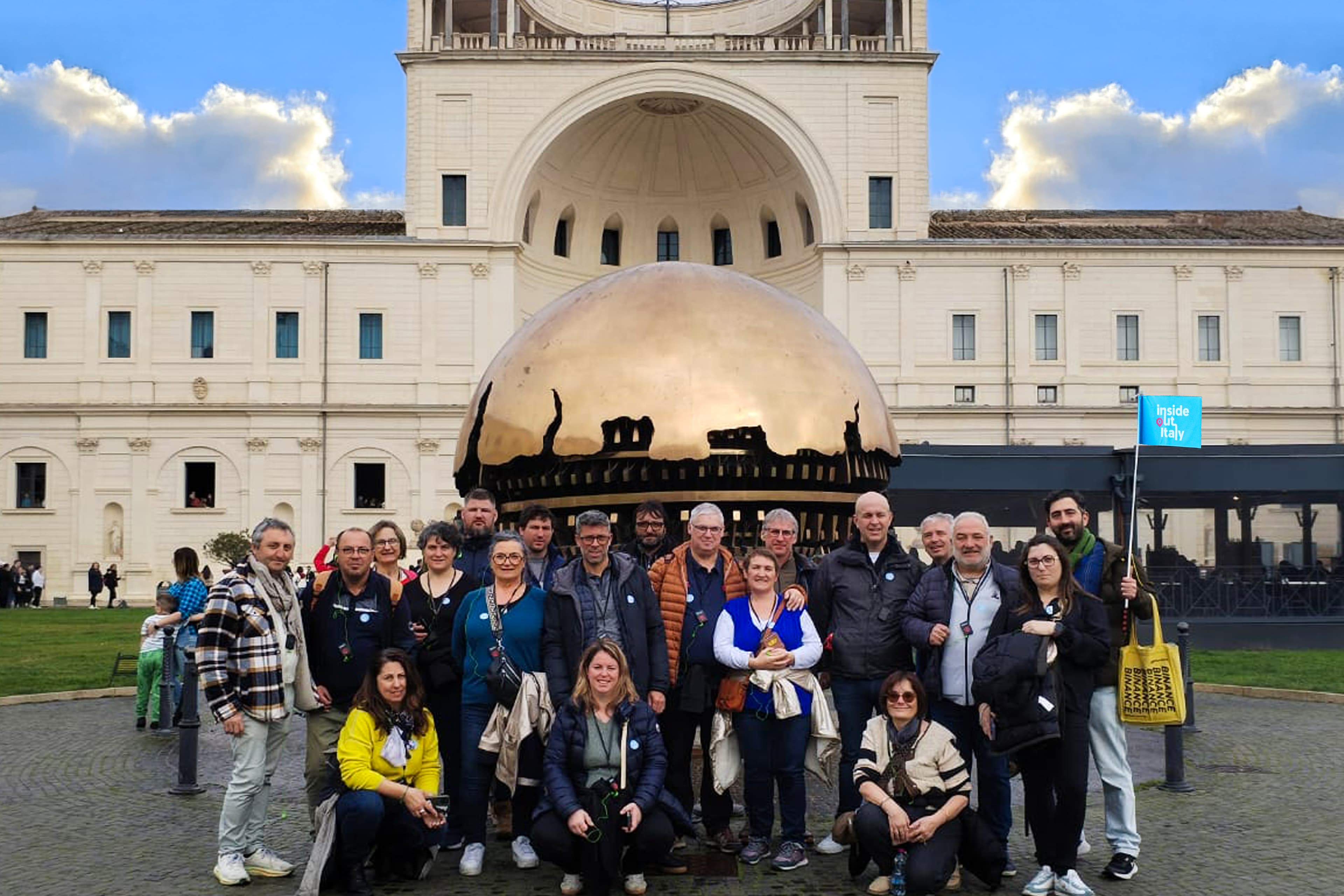
If you want those stories told by someone who knows every courtyard and every legend, book one of the Vatican private tours by Inside Out Italy: an expert local guide, skip-the-line access and a pace built entirely around you, from the Sistine Chapel to the very steps where the Swiss Guard made its last stand.